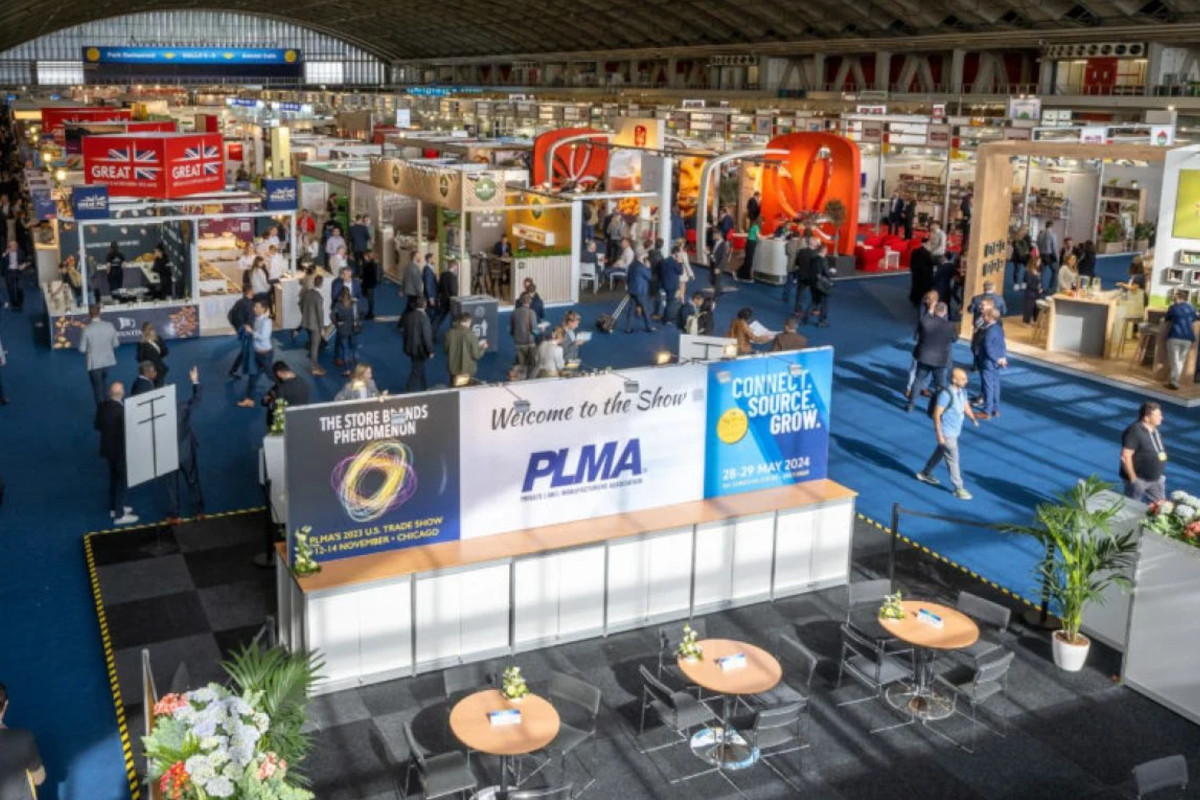
Every year, PLMA World of Private Label brings together retailers, buyers and manufacturers from across Europe andbeyond. Organised by the Private Label Manufacturers Association, the event has become one of the most important meeting points for companies working in private label.
In 2026, the trade show will take place on May 19–20 at RAI Amsterdam. It will host thousands of exhibitors from dozens of countries, covering both food and non-food categories. For many companies, this is not just an exhibition, but a place to build long-term partnerships and enter new markets.
More than a trade show: a full week of industry insights
The PLMA week starts even before the exhibition opens. On May 18, a series of pre-show seminars and workshops will bring together industry experts, retailers and market analysts. These sessions focus on key topics shaping the private label sector today, including changing consumer behaviour, inflation, sustainability requirements and the growing role of innovation.
The same day also features the announcement of the “Salute to Excellence Awards”, recognising some of the most successful and innovative private label products in Europe. This creates an important context for the exhibition it self, where trends discussed during the seminars can immediately be seen in real products on the show floor.
Baltic countries at PLMA: different strengths, shared ambition
At PLMA 2026, the Baltic region stands out not as a single block, but as a combination of different capabilities. Lithuania and Estonia, in particular, present distinct approaches that together form a strong regional offer for European retailers.
Lithuania: scale, variety and export experience
Lithuania arrives in Amsterdam with one of the largest delegations in the region, bringing more than 30 producers and two national stands. The country presents a wide range of products, from dairy and bakery to snacks, beverages and innovative food solutions.
Among the participating companies are Viciunai Group, Žemaitijos pienas, Kėdainių konservų fabrikas and MV Group, all of which have experience working with international retail chains. They are joined by companies such as Super Garden, Malsena Plius and Rūta, reflecting both innovation and tradition.
Lithuania’s strength lies in its ability to offer a broad product range together with reliable production capacity. This makes it an attractive partner for retailers looking for stable supply andflexible solutions.
At the same time, the country also highlights its food heritage. Products like Šakotis represent traditional craftsmanship, while modern manufacturers focus on organic, protein-rich andfunctional foods.
Estonia: innovation and niche products
Estonia’s presence at PLMA is smaller, but clearly focused. The country positions itself through innovation and high value-added products, especially in fast-growing categories.
Companies such as Balbiino, Salvest and Nõo Lihatööstus represent established players, while newer brands bring fresh ideas, including plant-based and ready-to-eat solutions.
The Estonian approach is closely linked to changing consumer expectations. Convenience, health and sustainability play a central role, and producers are quick to adapt their portfolios to these trends.
A growing role for the Baltic region
The participation of Baltic countries show the region is evolving in the European private label landscape. Rather than competing only on price, companies are increasingly focusing on quality, innovation and long-term partnerships.
For the Benelux market, where private label already plays a major role in retail, this creates new opportunities. Baltic producers can offer flexible production within the EU, competitive costs and a strong focus on product development.
Building bridges between regions
Events like PLMA World of Private Label highlight the growing connection between the Baltic countries and Western Europe. For platforms such as Benelux Baltics in Business, this is exactly where the value lies - creating links between producers in the Baltics and retailers in the Benelux region.
As the private label sector continues to grow, these connections are becoming more important. The Baltic countries are no longer seen only as small markets, but as reliable and forward-looking partners in the European supply chain.
PLMA Amsterdam 2026 once again shows that private label is not just a trend, but a key part of the future of retail in Europe.
Lithuania brings scale and diversity. Estonia brings innovation and focus. Together, they present a strong and relevant offer for retailers looking for new partners.
And in the middle of it all, Amsterdam becomes the place where these connections start.

